Three Takeaways on Agentic AI from the Tech + Society Conference
Reflections from the UCLA Anderson Tech + Society Conference on product quality, AI infrastructure, trust, and the skill shifts agentic systems are accelerating.
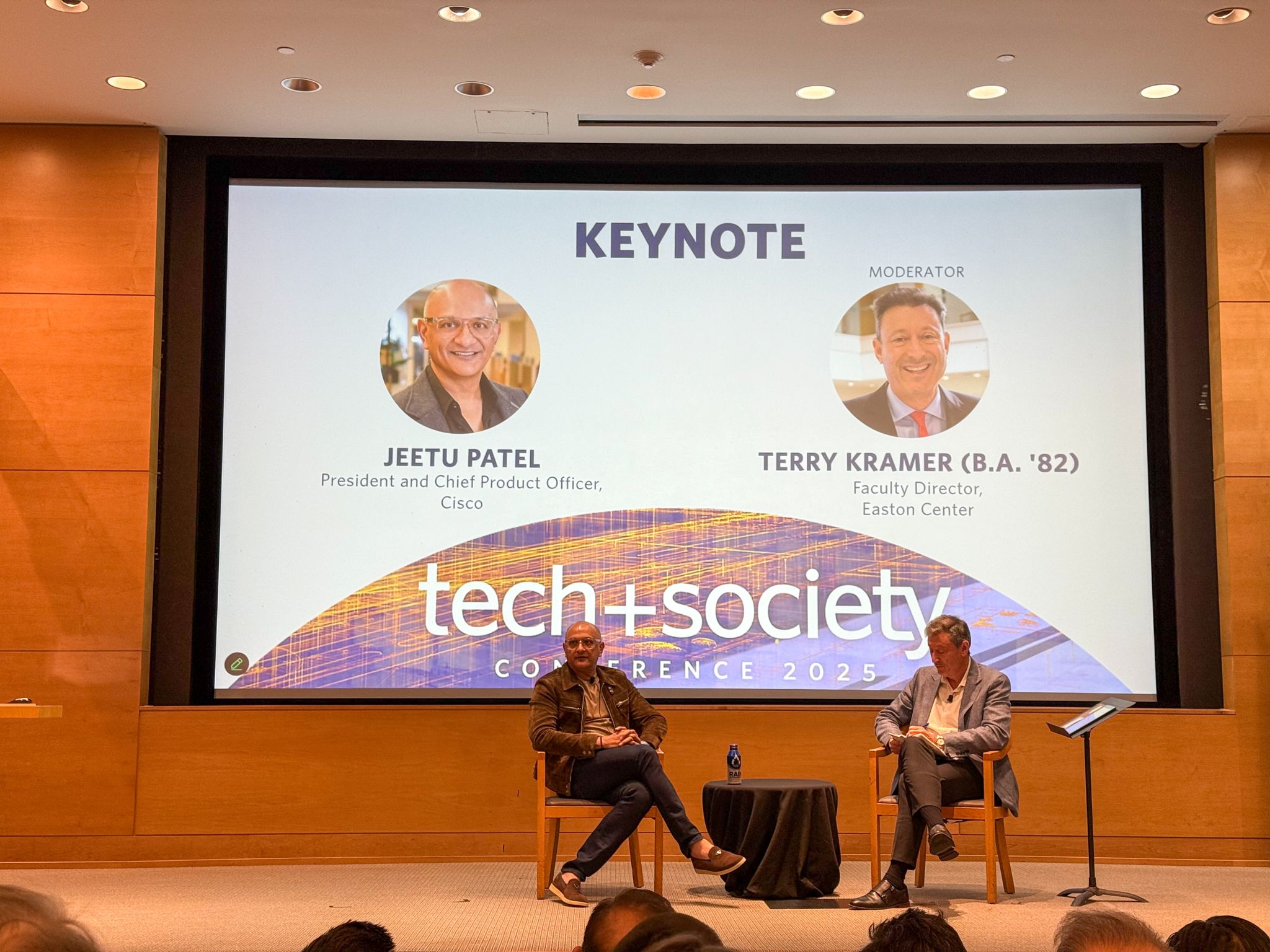
At the Tech + Society Conference 2025, hosted by the UCLA Anderson Easton Technology Management Center, a panel discussion explored how agentic AI is reshaping the technology landscape. The session featured Jeetu Patel, President and Chief Product Officer at Cisco, and was moderated by Terry Kramer.
One quote that stuck with me came from Mark Twain:
I didn’t have time to write a short letter, so I wrote a long one instead.
Simplicity is difficult. With that spirit, here are three ideas from the session that stood out.
1. What kind of products should we build?
Products people cannot stop talking about. The kind you naturally recommend to friends and family. Word-of-mouth energy is often the strongest signal of product value.
It reminded me of moments we discussed in strategy class, early Uber founders personally reaching out to black-cab drivers in San Francisco, or Airbnb founders going door-to-door to convince hosts to list their homes.
2. Key constraints shaping the AI ecosystem
Infrastructure
AI demand is driving massive infrastructure expansion, with gigawatts of computing capacity being built in regions like Saudi Arabia and the UAE. Data centers are becoming strategic national investments. Cisco is working on low-latency connected data-center clusters integrating switches, GPUs, and hyperscaler infrastructure to support this scale.
Trust and security
AI systems can behave unpredictably. Cisco’s focus is on building guardrails and infrastructure so organizations can deploy AI safely without reinventing governance and security frameworks.
Data and applications
The real leverage does not come from algorithms alone. It comes from proprietary data and the applications built on top of those models.
3. A cultural shift in skills
AI will reshape how work is done. Roles will evolve, and education systems will adapt. The most important skill will be learning how to learn quickly. Balancing experience to recognize patterns with the willingness to unlearn and adapt will matter more than ever.
Qualities like curiosity, hunger, and adaptability will likely define the next generation of leaders.